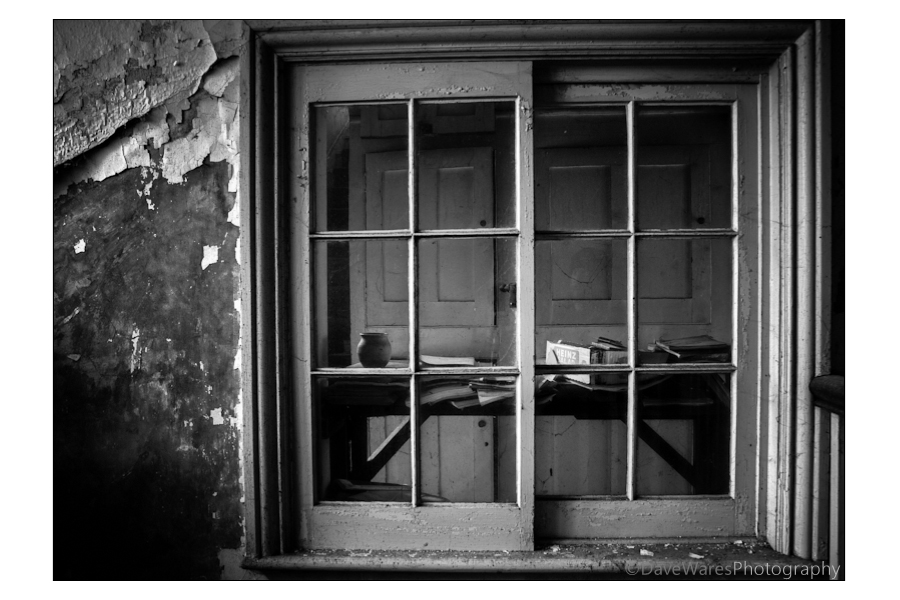
 Taken at an old derelict manor house.
Just a quick post from me today as the family and I are getting ready for a short break away. Nowhere exotic but will be great fun for the kids.
See you on the other side. Thanks for stopping by.
Photographer
Taken at an old derelict manor house.
Just a quick post from me today as the family and I are getting ready for a short break away. Nowhere exotic but will be great fun for the kids.
See you on the other side. Thanks for stopping by.
A while a go I decided to have a stab a creating a time lapse video. Please turn your sound on to hear the music.
This video is only my second attempt so there are a couple of faults with it, the main one being the spot of sensor dust. Darn these Dslrs!
Creating a time lapse movie is a relatively straight forward process, the main thing you’ll need though is a lot of patience. First of all there will be a small amount of maths that you’ll need to calculate before you set out. First is the intended length of your movie, I would suggest anything between 30-60 seconds. This may not sound a lot but things will become a bit tedious if longer than this, unless it’s something pretty spectacular. Next you need to determine the length of the event you will be shooting, for example in this movie I decided I wanted to capture half hour before and after sunrise, so an hour in total. Lastly (and this is optional but a good guideline to stick to) movies tend to be shot at around 24-25 frames per second, so this is the amount of photos you’ll need to take for every second of movie; so for example if you wanted a 30 second movie you would calculate 24×30=720. 720 will be the number of shots needed to create your 30 sec movie. Now you need to determine at what intervals you’ll need to take each photo, which is as follows: 3600 seconds ( an hour in seconds that I want to capture) divided by 720 shots =5 So you’ll need to take one shot every five seconds.
So again as a list:
24 shots multiplied by length of movie in seconds =total number of shot needed
Convert duration of event into seconds (e.g 1hour=3600 seconds)
Divide duration of event by number of shots needed to give the interval at which each shot should be taken.
Now, there are a couple of ways in which you can do this. One is to buy an intervalometer, a gizmo that plugs into the cable release socket on your camera ( if you have one). This is great as you can just program this with your shots per second and let it get on with it, time to put up your camping chair and get the flask of tea out. Second is the hard way and the way I had to do it (which is probably one of the reasons why I’ve left it so long to attempt another), and that is to do it manually with a remote shutter and a stopwatch. This will be the thing that puts most people off as it is really tedious, but the results can be well worth it I can assure you.
How you set the camera up will depend on the situation and a little trial and error will be needed, however I would recommend switching to full manual, that includes the focus and choosing a white balance too rather that having it on auto, that way all of the shots will have a consistent look. No need to shoot RAW either or at max size, this will make the process longer in post and take up an enormous amount of hard drive space. I would set the file size to small jpeg as even at this size your photos should still be large enough to make a HD movie at 1080p, and the smaller the file the more you can get on a single memory card. You don’t want to be swapping cards during a time lapse shoot.
Making the movie on the computer is not too difficult, you can use Quicktime pro or as I did using Windows Live movie maker or any number of other software out there. If using Windows Live Moviemaker, load in all of your images, highlight them all, then change the slide duration to 0.05 to give you a frame rate of around 24-25 seconds. Add sound, music captions as desired. I would recommend finding copyright free music to prevent any issues.
Hope you enjoyed my rather Heath Robinson attempt at time-lapse and hope my guide is half way understandable. If any one has more tips or suggestions, please leave a comment for others to see.
Thanks for stopping by.
 Title-Stargazing
So here we are with another mono Monday image. This was taken a couple of years back whilst on a trip to London with my cousin and a couple of his friends. I like how I’m taking a picture of someone appreciating another photographers work. There’s a simplicity about having just the one person in the frame that appeals to me, had there been more it wouldn’t have worked so well, if at all. Black and white just seems to be the right choice for this picture.
I’ll have to make a return visit at some point and have another stab at some street photography as it’s an area I really need to get more confidence with.
Btw, I am now on Google+
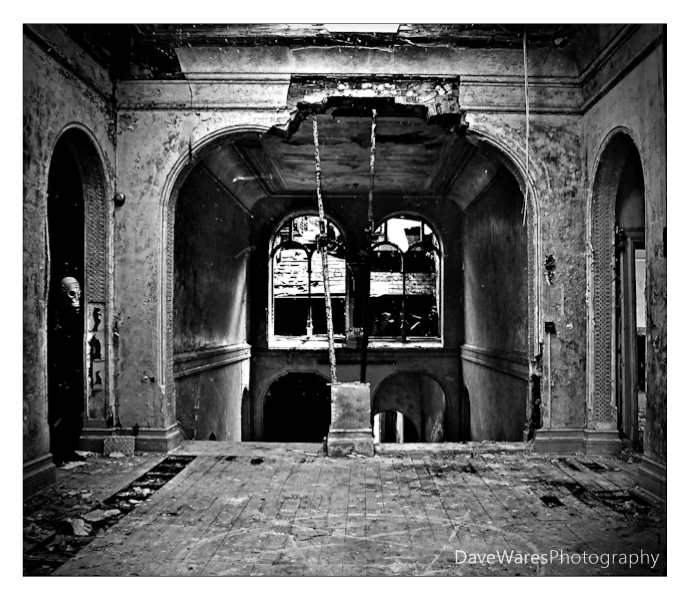
Title-‘You’re not welcome’
This is a slight reworking of an older photo from a couple of years ago, taken at the dangerously derelict Lillesden school for girls. Originally it was a colour photo to which I added a mono layer to grunge it up a bit, the end result looking very muted and dirty. For this version all I did was to take that photo and convert it to mono, which I did using one of the free presets from onOne’s PerfectPresets plugin for Lightroom.
I quite like breathing a new bit of life into older pictures as they tend to get pushed to the back and forgotten about on sites such as Flickr.
Thanks for looking.
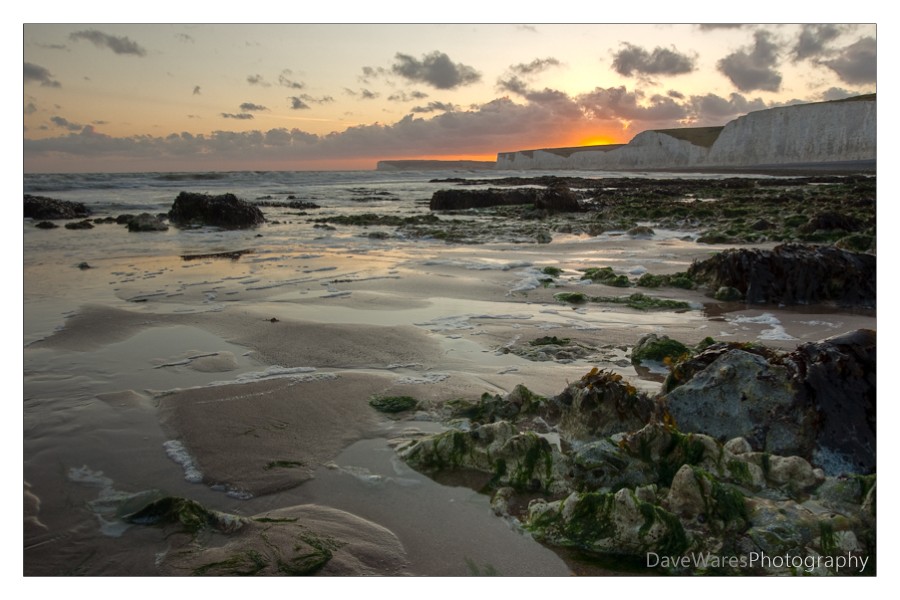
Title-‘Going, going…’
So here are a couple more shots from my trip down to Birling Gap last Tuesday. Perhaps not the most exciting light you ever saw but it was very nice to be out with the camera nonetheless; that’s the one thing I love about this type of photography, the excuse to rid your mind of those everyday tasks and enjoy the experience of involving yourself with nature.
All in all I ended up with around half a dozen shots that I’m quite pleased with, a success in my book. Having started out shooting slides I still work on the principle of 4-5 shots out of 36 being a good crop.
I do love the almost mirror like reflections between the sand ripples.
 Title-‘Wet sands’
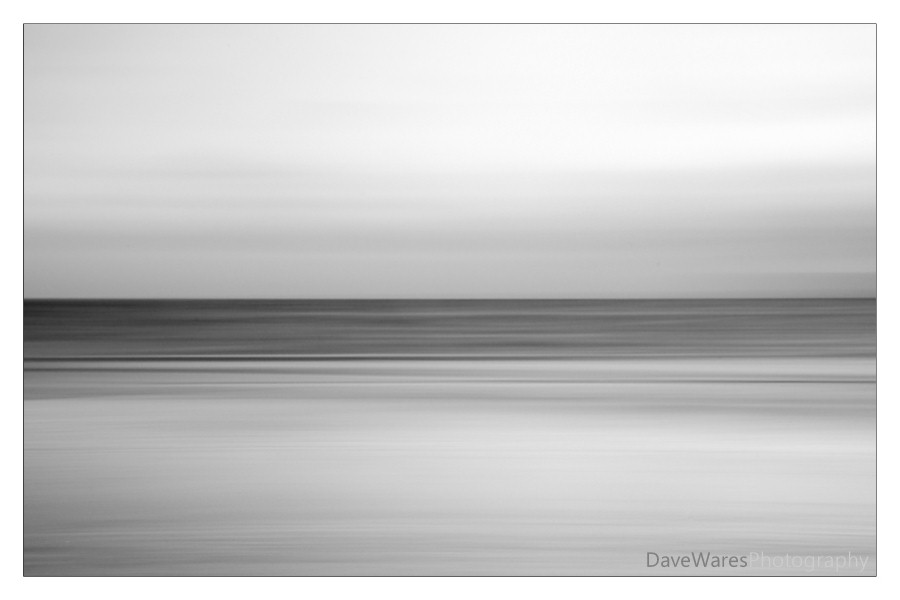 Title-‘Seaside sweep’
I’ve gone with a rather minimalist shot for today’s Mono Monday. This was taken at Birling Gap on the same evening as the previous post but at the end of the shoot just before we hit the pub. The light we had hoped for withered away leaving us with not much more than a drab grey sky, however, I thought I’d try to create some abstract shots by panning the camera during a longish exposure. I took about half a dozen in total with this being the most successful.
I was going to keep it as a colour photograph until I saw a recent post from my good pal Brian Matiash. Brian has been experimenting with minimalism in mono lately, and this prompted me to see how this shot would turn out if I did something similar. I think I actually prefer this to the original colour one, so cheers Brian!
For those interested I hand held the camera, panning it during a half second exposure at f22, iso200.
 Dave Wares