Blog, Landscapes, Tips

The Early Bird

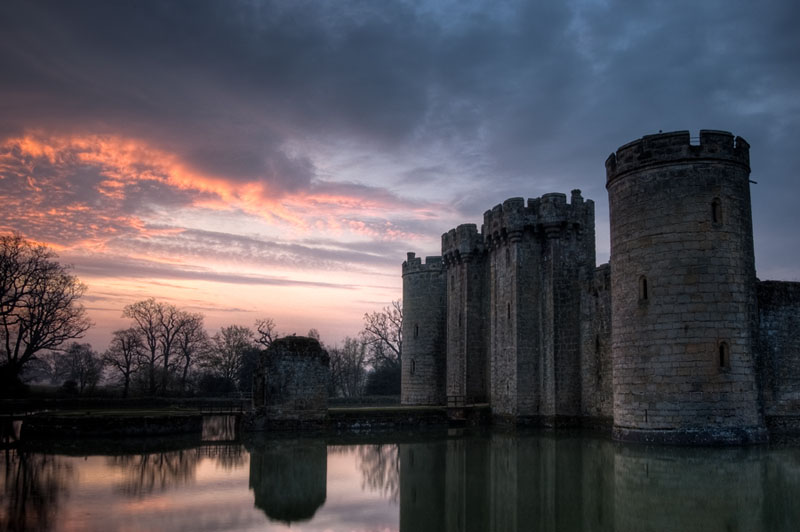
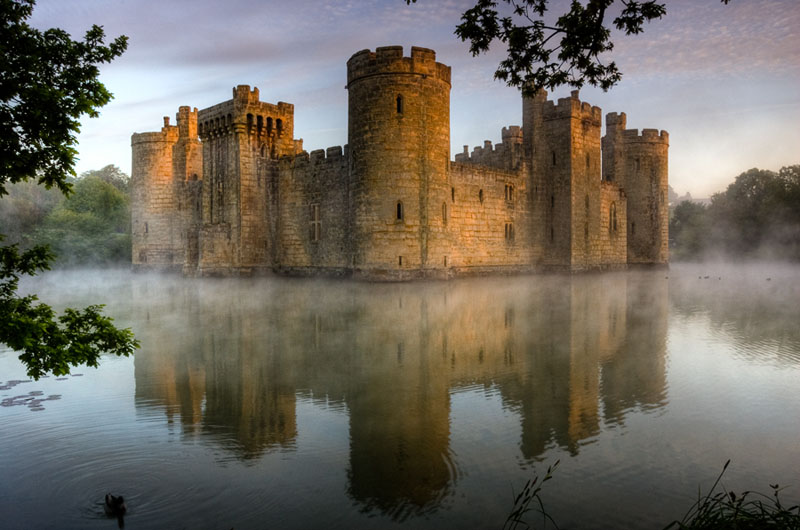
Bodiam Castle shot moments before sunrise giving a lovely orange glow reflected on the clouds.

The early bird catches the worm, and the same goes for photographers if you want to get out and take great pictures. There is no hard and fast rule but generally speaking the best time to get a great quality of light is to be out at either end of the day. From dawn till just after sunrise, and from about an hour either side of sunset.

Get there early!

Of course there are going to be differing factors throughout the year, such as shorter days during winter where the sun is also lower, and longer days during the summer months where the sun gets much higher and stronger, but whatever time of the year I would always recommend getting out as early as is necessary. Find out when sunrise is and get there at least an hour before, this will give you time to walk around to find the best spot and set your gear up. If you’re ready to go with time to spare you’ll be much more relaxed giving you the opportunity to take in your surroundings. I think that if you can immerse yourself with what’s going on around you, the feeling you get will translate to the picture and hopefully the viewer.

Take these pictures for example. I arrived whilst it was still dark thus giving me time to have a good walk around to view all the angles and consider different compositions. Once I had the pictures in my head it was just a matter of watching the sky to see where the first signs of light would come from. The low morning sun gives beautiful warm tones and because it’s low it casts shadows that define elements in the scene, giving a greater sense of shape and depth. The shot above was bracketed and tonemapped so I could get some detail in the stonework which the camera couldn’t record in a single exposure but my eye could see perfectly. I could’ve used an ND grad to help balance the sky but this would have darkened the tops of the towers. Even when doing an HDR image it is important to keep the shadows and not get carried away with balancing all the elements in the scene just because the software can make it possible.

The shot below (taken on a different day, not bracketed) shows the light just after sunrise, with the warmth of the sun being just enough to evaporate the water giving the scene a wonderful moody atmosphere. It just wouldn’t have had the same feel and impact had it been taken during the middle of the day, and I certainly wouldn’t have got all the steam coming from that moat.

So get up early and don’t be tempted by the warmth of that duvet…You’ll be rewarded.
Blog, HDR, Urbex

A glimpse of the past

Another shot from the trio of rusty cars I found the other week.

I had mentioned in an earlier post that I was keen to get an interior shot of one of the cars, but unfortunately all the doors were either locked or jammed. I did accidentally pull the back door off this Morris Minor as the wood frame had totally rotted away, but there was too much junk in the back to try to climb through, plus I was wearing a half decent pair of jeans that I wasn’t prepared to ruin.

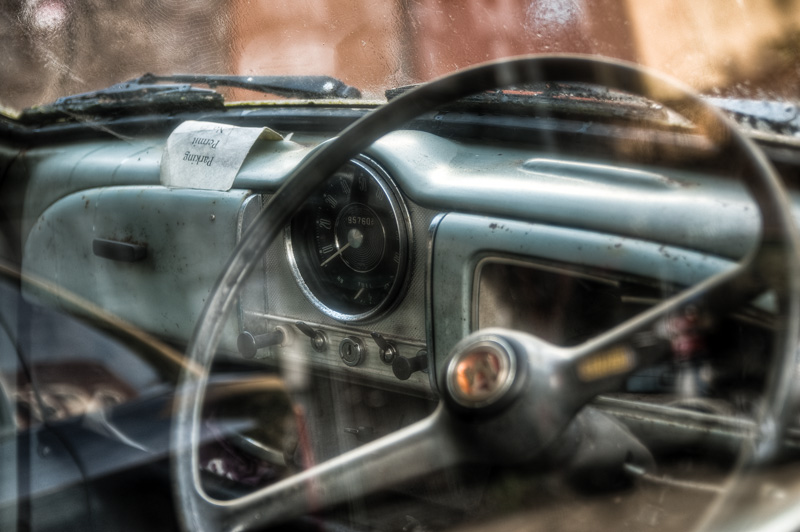
I was really taken with the view through the drivers window and though initially I would have preferred to have shot this without looking through the glass I now think that it has worked out for the better. I’m rather fond of the reflections and think this helps with the overall effect, making you feel like a person who is having a nose around.

I love how simple cars used to be too. No air-con or fancy electrics, even a radio was probably a luxury in some cars, and with the amount of fancy gadgets to go wrong in modern vehicles I sometimes wonder if going back to more simple controls wouldn’t be that bad of an idea. I could live without having to use a choke though. I remember having to use a washing peg to keep the darn thing out during the winter months.

On a separate note, I would like to thank all of you who have visited, commented and spread the word over on  Twitter. I’ve only been doing this for a week and the response I’ve had has been fantastic. Cheers!


Blog, HDR, Tips, Urbex

Back alley revisit

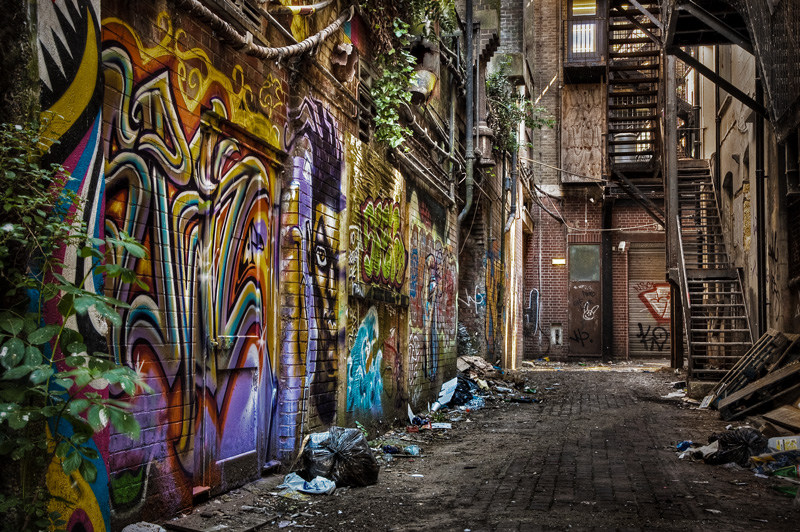
The great thing about locations that attract graffiti artists is that they are constantly being changed. I took a visit to a back alley behind my local library in June of last year and was delighted to see such a photographic feast, with all sorts of art, tagging and detritus to hone in on. Looking at the version below shot in June of last year, you can see that all of the graffiti in this section has completely changed. The picture above was taken about a week ago and I decided that I would replicate my past attempt to see how the scene had changed. Somebody has also come along a tidied up all the rubbish that was scattered about the floor, which was nice as I didn’t see any rats this time.

I processed the version above without the intention of wanting to totally copy the first version but it turns out that I seem to like a certain look when it comes to this particular place as they have ended up looking very similar. There is a slight difference in light but that is because the shot below was taken on a bright day, whereas the shot above was taken in overcast weather.

I’m sure that in another six months time it will have totally changed again, I’ll definitely be making another visit to find out. So if you ever have been to a location and thought that you had photographed every possible angle you could think of, give it six months, maybe even a year and revisit it, you may be pleasantly surprised.

Oh and the first time I went here a pigeon pooped on my head. I got away with that this time.

Blog, HDR, Urbex

The door? It’s just a Minor problem

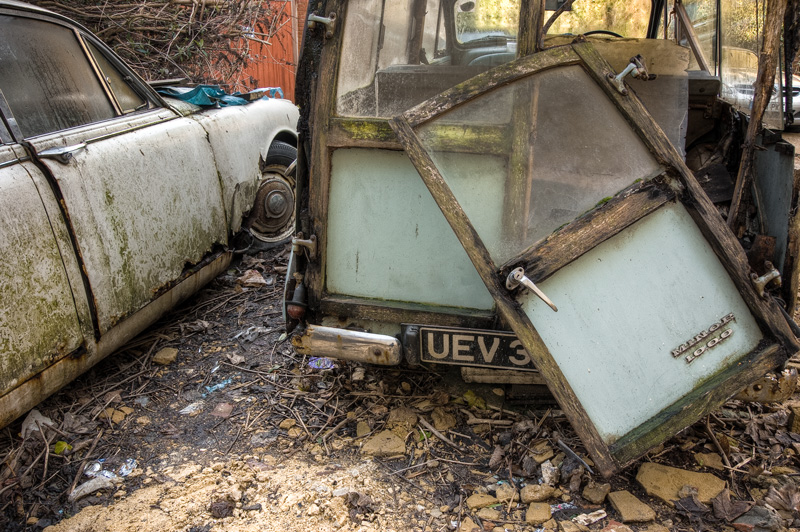
I have a confession to make. When I approached the back of the car, the door was still in place. However I was eager to get an interior shot so I tried the door…And it fell off!

I present to you the back end of a Morris Minor Traveller 1000, a car with the back end based on the blueprints of a shed. Couple that with years of neglect and wood rot sets in, and before you know it the thing falls apart. How about that, a car you need to creosote.

I would have loved to have taken a wider view but alas 18mm is the widest I can go and my back was against a wall. Pretty pleased with how this one came out, even if it was slightly encouraged by my heavy handedness.

Blog, Flora, Tips

Using the spot meter

On Most cameras these days there are at least three different options when it comes to choosing the types of light metering system you use. These are typically ‘Matrix/evaluative’, ‘Centre weighted’ and ‘Spot metering’ modes.

Usually your camera is set to the Matrix/evaluative metering out of the box and 8/10 times this usually does a pretty good job. This mode takes a reading from the entire scene and does its best to give an exposure to suit all of the elements within that scene. Centre weighted is the next option. This mode takes a reading from, as its name suggests,  the middle proportion of the frame. Old school photographers tend to like this mode, myself included, as it gives fairly predictable results. I find that it is also very useful when you are shooting nature, when the animal (such a a deer for example) will typically fill the middle part of the picture, hence using the centre weighted light meter will make sure that animal will be correctly exposed for.

Now we come on to the spot metering mode (on some Canon models I believe this can be called ‘Partial’. I’m a Nikon chap so don’t quote me on that!). This mode takes a light reading from only a very small percentage of the scene, typically 2% and on most cameras it will take the reading from where the centre focus point is. I don’t tend to use this mode too much but in certain situations it can be a real bonus. For example, you could be taking a picture of a small bird that you choose to be relatively small in the frame, and by using the spot meter you can take a reading off the bird ensuring that your main subject will be properly exposed for. You may want to use the exposure lock button found on the back of your camera if you want to recompose your image once you take the reading.

For the picture above I decided to use it to achieve a slightly different result. This flower was shot at around midday and in bright sunlight, but I noticed that there was a tree above casting its shadow around the flower, plus there was a wall behind also slightly in shadow. The sun on the flower was very bright but I knew that by choosing the spot meter mode and taking a reading from the yellow centre of the flower it would correctly expose for that keeping the detail, but also it would have the effect of darkening the rest of the flower and the shadows in the background. The scene was far brighter to look at than what you see here.

These are just a couple of examples of how to use the spot meter, I’d be interested to know what your experiences are too.

I hope this has been of some use. Thanks for reading and happy shooting.

Blog, HDR, Urbex

Getting in close


We all love getting the wide shots,  be it a sweeping landscape or a wide angle shot of a derelict corridor, you just can’t get enough of them. I know I can’t. For me it is always the small details that I seem to forget, not because I don’t see them, it’s just that I can get carried away in taking the whole scene. These days I make a concerted effort to look at all the angles, wide and close.

On the morning I found the trio of decaying cars I knew that getting in close could result in some interesting pictures, with lots of detail in the badges and rust to focus on.  For this shot I decided to get in really close with my 18-50mm at the 50mm end to really focus on the badge, while using an aperture of f2.8 would ensure the background would be nicely out of focus adding a sense of depth.

So don’t forget, get in close and get those details. Happy shooting.